One wallet, seven jobs. Which one is yours?
Last updated:
Flexdger Wallet simulates a crypto wallet app. You fill in a form to compose the wallet, then open it full screen on your phone. That one wallet covers seven kinds of work, and each has its own page covering what the work asks for, where the product stops and what to read next.
On our homepage · inside a phone frame · no sign-in
The seven jobs
Every picture shows the top of a wallet drawn by the engine that runs yours, named after its job. Pick a tile to open the page for that kind of work.
-
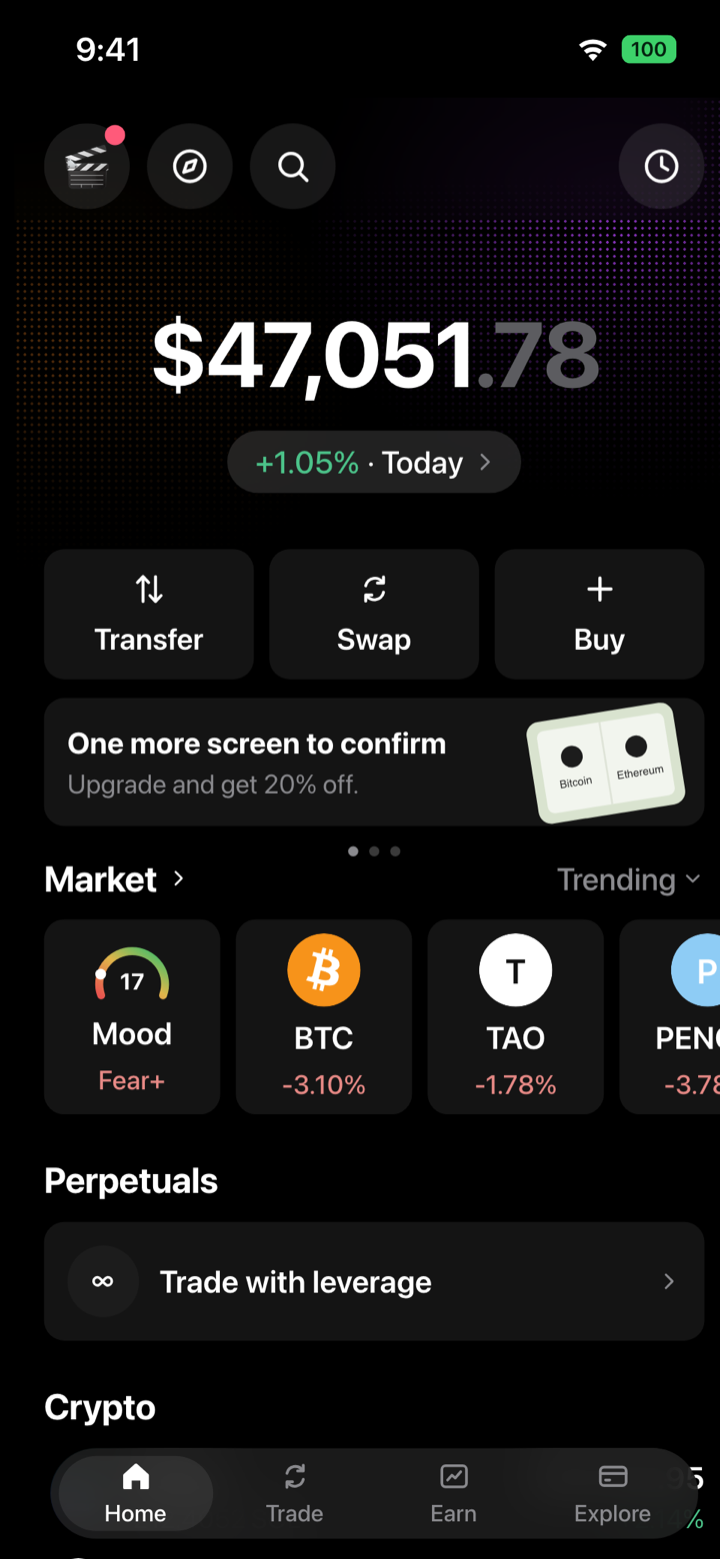 Live duels
Larp battles
The balance you raise to a webcam, shown on your own phone.
Watch: Leave a Mockup label in the frame, and never caption it as your holdings.
For larp battles → -
YouTube · TikTok
Videos and shorts
A wallet whose prices tick on camera, recorded on your own phone.
Watch: Leave a Mockup label in the frame, and never caption it as your holdings.
For creators → -
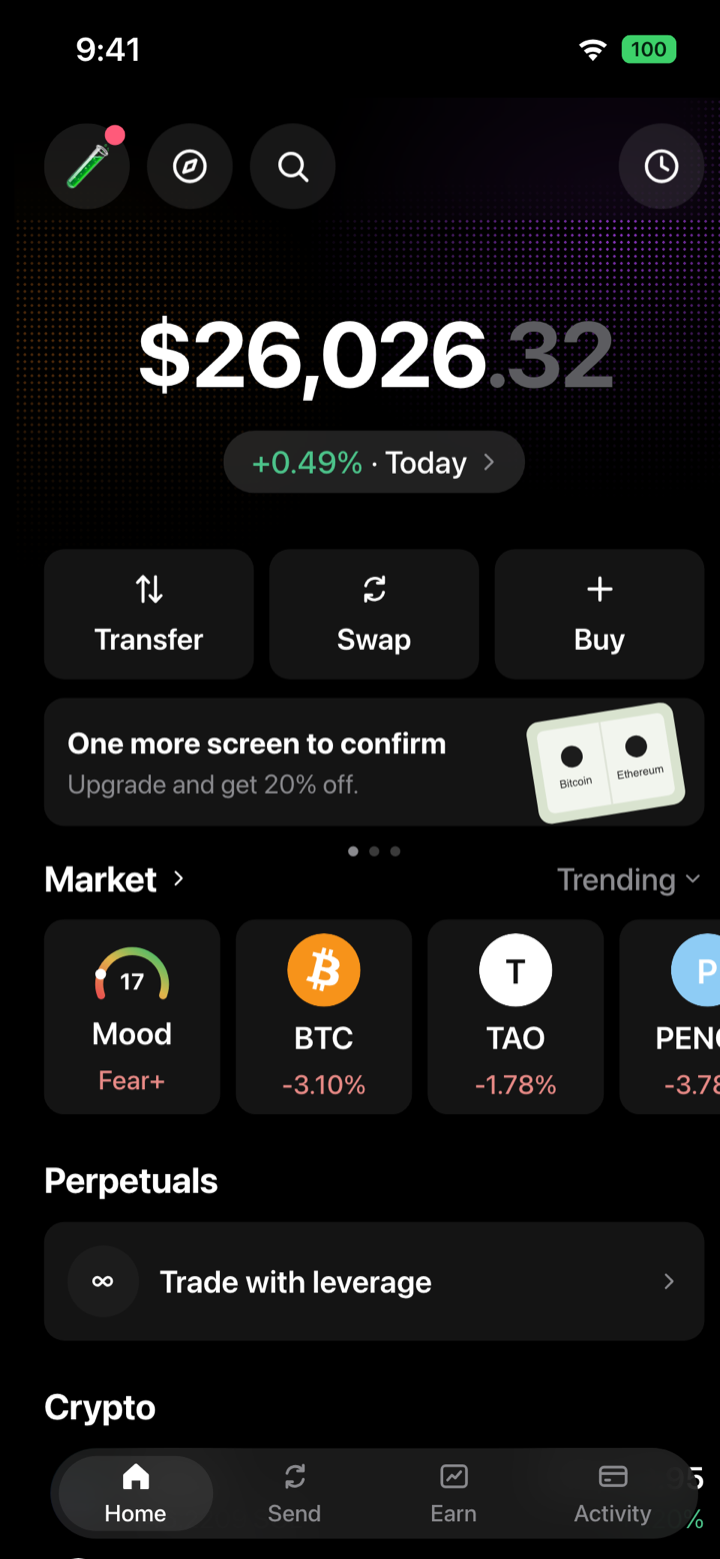 Pre-launch · Concept
A wallet app before launch
A screen with data in it for your pitch and your concept test, ahead of your build having any.
Watch: The store listing itself shows your build.
For wallet app builders → -
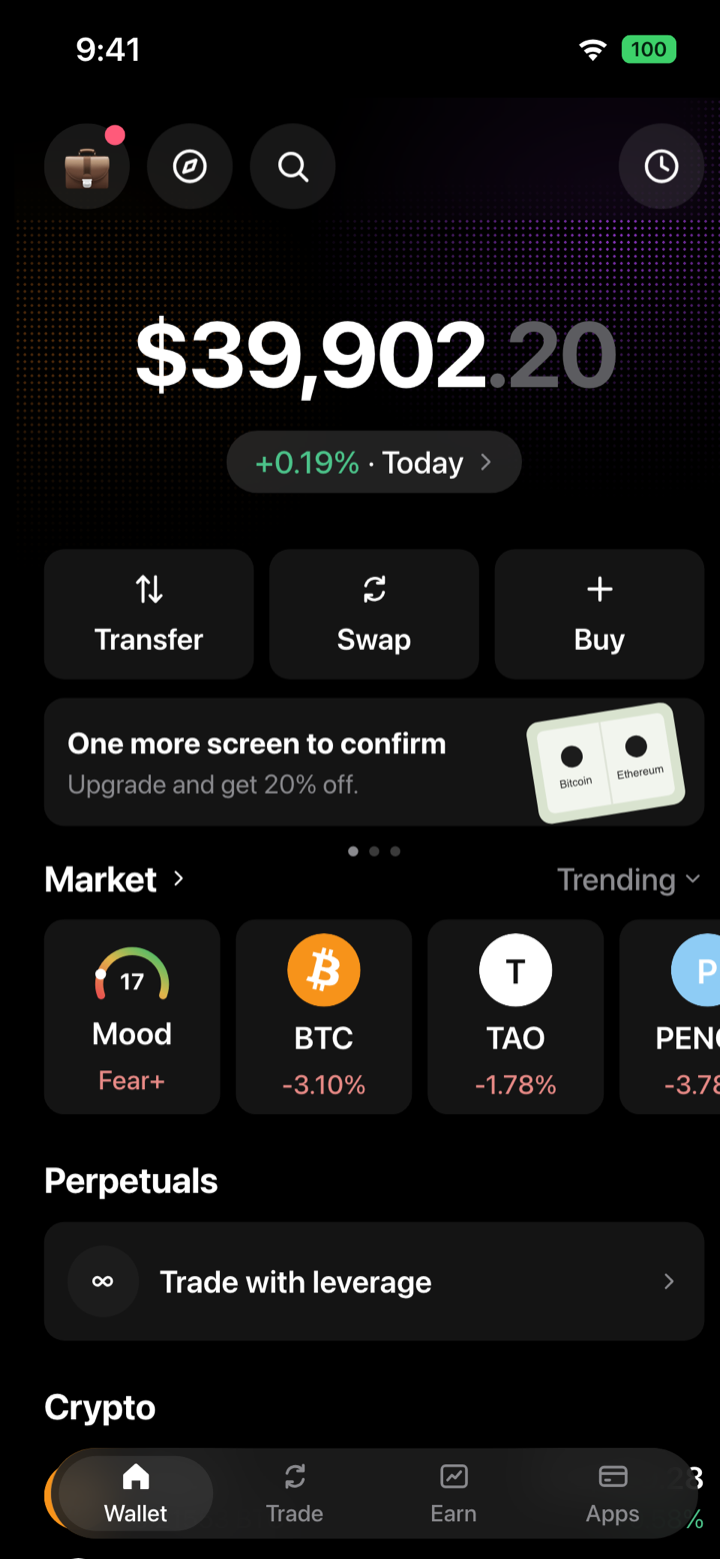 Sales · Stage
Product demos
A wallet to show live, without anyone’s real balance in it.
Watch: Built-in prices need a connection, so capture each beat of the demo ahead of time.
For demos and decks → -
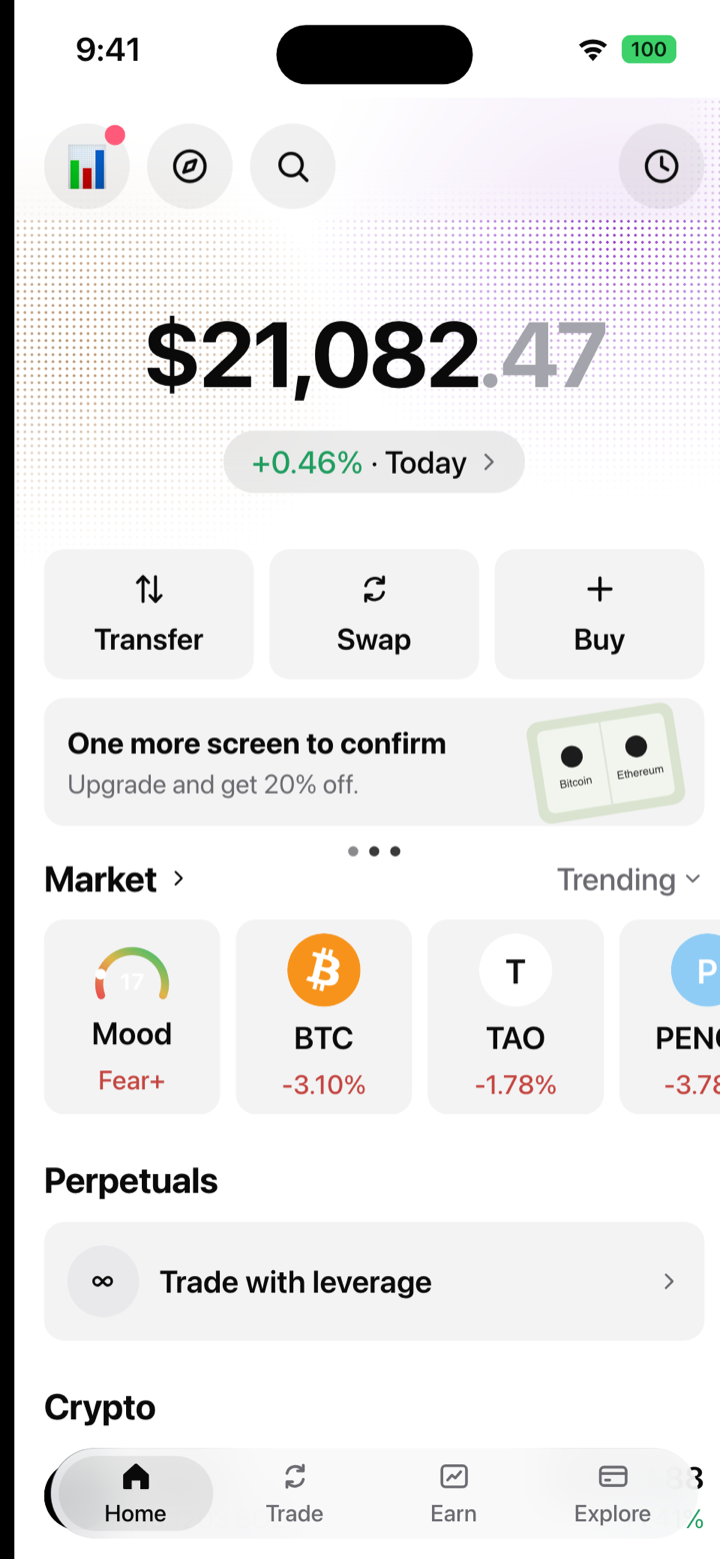 Fundraising
Investor decks
A portfolio screen for the product slide, labelled as an illustration.
Watch: Never present it as assets, users or revenue; traction goes on a sourced chart.
For demos and decks → -
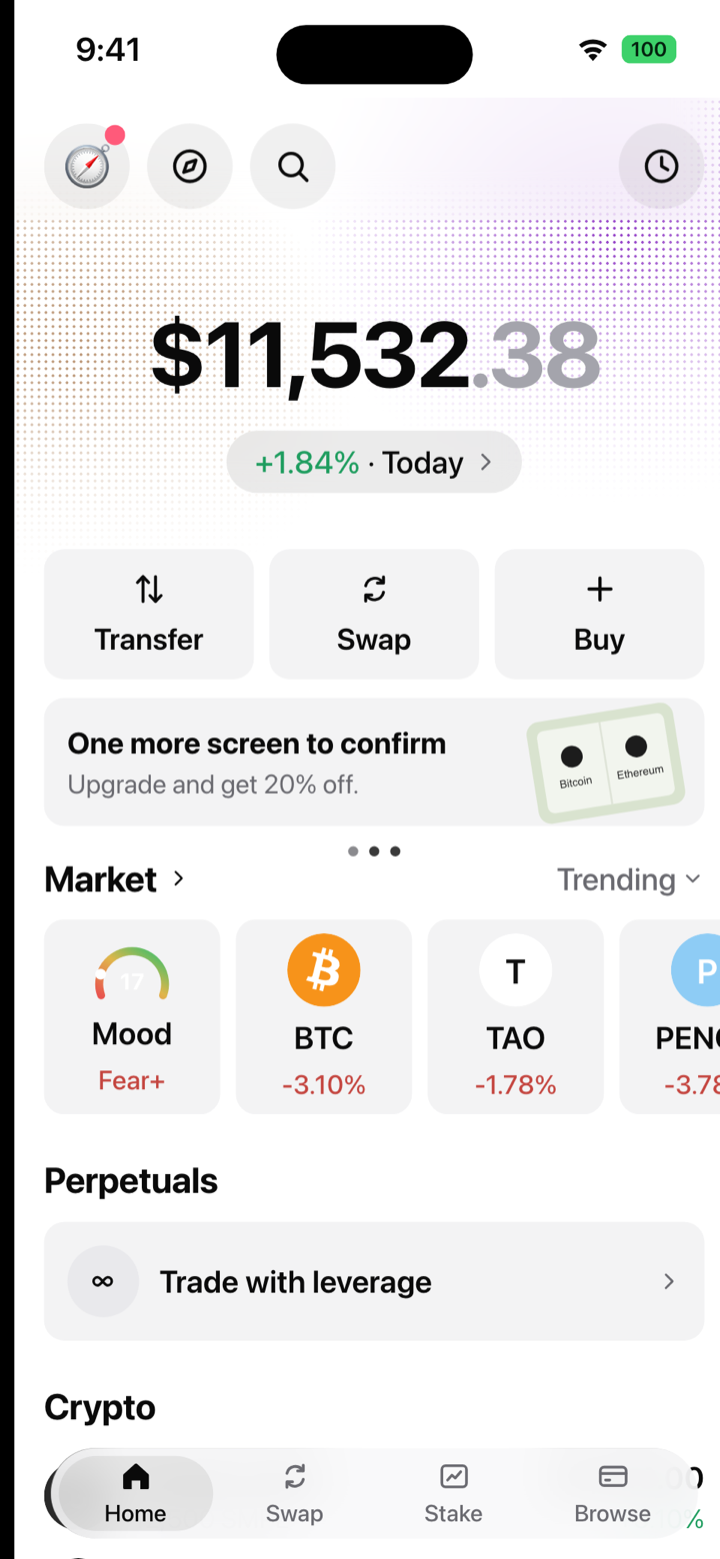 Design · Prototype
Design reviews
A filled wallet screen to place beside your own designs.
Watch: There is one fixed design, so your own screens stay in your design tool.
For wallet app builders → -
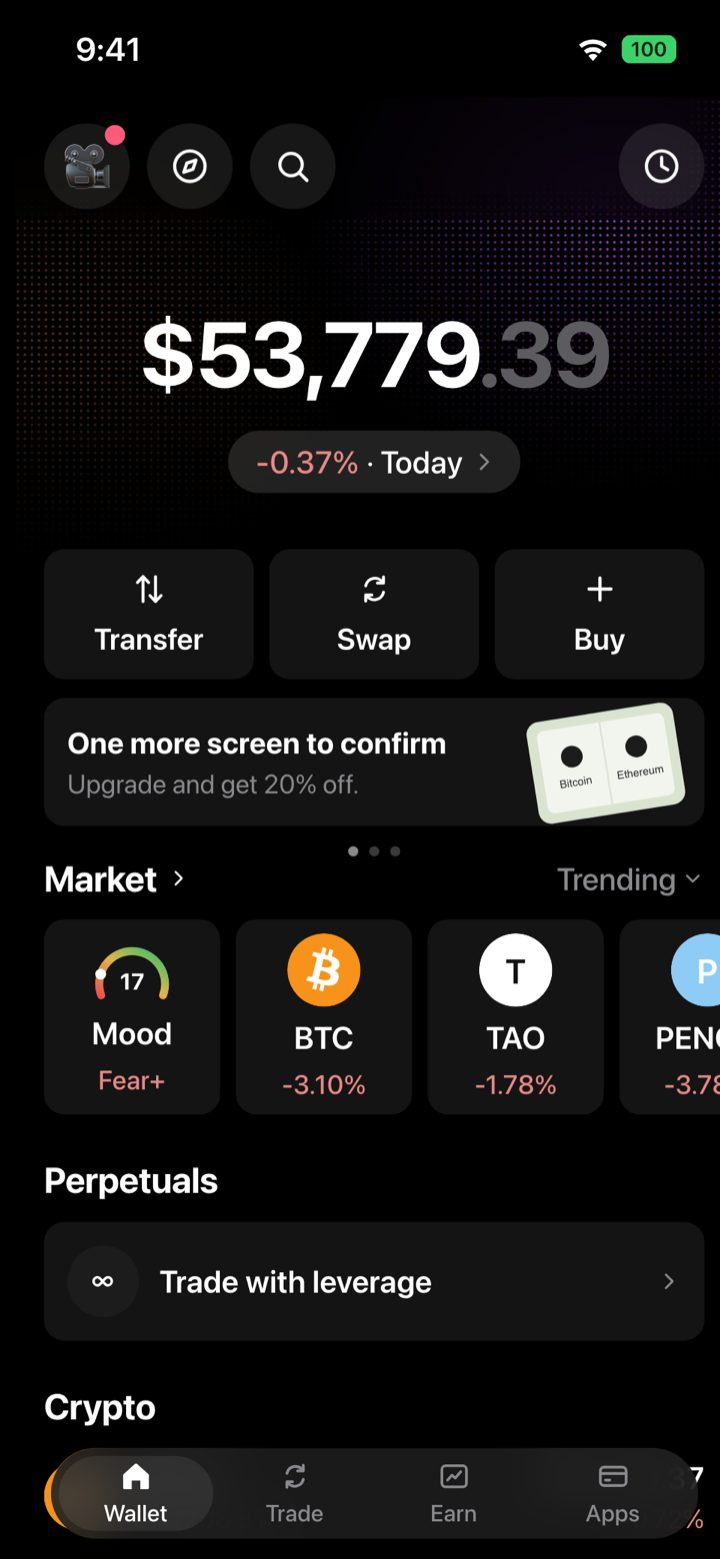 Film · TV
Props on set
Quantities stay put from take to take, while prices follow the market.
Watch: When continuity must be exact, use custom tokens with a price you type.
For creators →
Access is personal (terms, section 4), and our terms are silent on business use. For a company or a client project, write to contact@flexdger.com before anything else.
What does not change from one job to the next
Built from a form.
Select the tokens, type the quantities and name the wallet. A row is quantity times price, and the rows add up to the total.
Full screen on a phone.
Once it has been added to the home screen it launches like an app, at an address of your own and under the phone’s real status bar. What that looks like on a phone.
Moving prices, fixed quantities.
The five built-in tokens (SOL, ETH, BTC, HYPE and USDC) follow the market whenever the phone is online. A custom token stays at the price you typed.
No file to download.
Nothing is exported. The screenshot or the screen recording is made on the phone, at its own resolution.
A single design.
Content, name, colour and labels are yours to change, and the layout is not. The screens behind the tabs hold fixed sample content. The stock avatar and search text point to a real wallet app, whose home screen the layout follows, so replace both before you record or present.
A mockup, and it says so.
Nothing is held in it and no chain is ever read. Wherever it appears it carries a label: a Mockup tag in a video, “Illustrative UI, sample data” on a slide.
Where it is the wrong tool
- As evidence of anything. Showing a screen as a real balance or an account statement, in order to obtain money, an investment or someone’s trust, goes against our terms.
- The store listing of your wallet app, unless your build displays this very screen. Apple’s App Review Guidelines (2.3) want screenshots to give an accurate picture of the app’s core experience. The builders page sets out where a composed wallet screen fits and where it does not.
- Every other screen. It draws the home screen of a wallet and its token pages, in one design. Onboarding, send and swap flows and layouts of your own belong in a design tool.
Do you still draw wallet screens by hand? This comparison covers the real effort of drawing a crypto wallet screen, what composing it changes, and the cases where a design tool remains the right pick.
Questions
What is a larp wallet?
A larp wallet, also called a crypto wallet app simulator, renders a wallet screen that looks genuine from numbers you enter yourself, for a video, a sketch, a pitch deck or a demo. Nothing is held in it and no chain is ever read.
Who uses a larp wallet?
Video creators who want a wallet in shot without exposing their own, presenters and founders who show a wallet step in a deck or a demo, teams building a wallet app before it has users, and teachers who want to show a wallet without real money in the room.
Is a larp wallet a real wallet?
No. It holds no funds, has no keys and reads no blockchain, and every quantity is typed in. It cannot send, receive or prove anything, and showing its screen as a real balance goes against our terms.
Look at the wallet before you choose a job.
The full wallet has no trial, but you can try the live demo first, with no account. Your own wallet runs on live prices, and each setting is yours: tokens, quantities, name, avatar, accent colour and cash row.
Look at the walletOn our homepage · inside a phone frame · no sign-in
Flexdger Wallet builds interface mockups. It is not a wallet: nothing is held in it and no chain is ever read. Every quantity shown was typed by hand, and the only real numbers are the market prices of the five built-in tokens. Showing a screen as a real balance or an account statement, to get money or someone’s trust, goes against our terms.